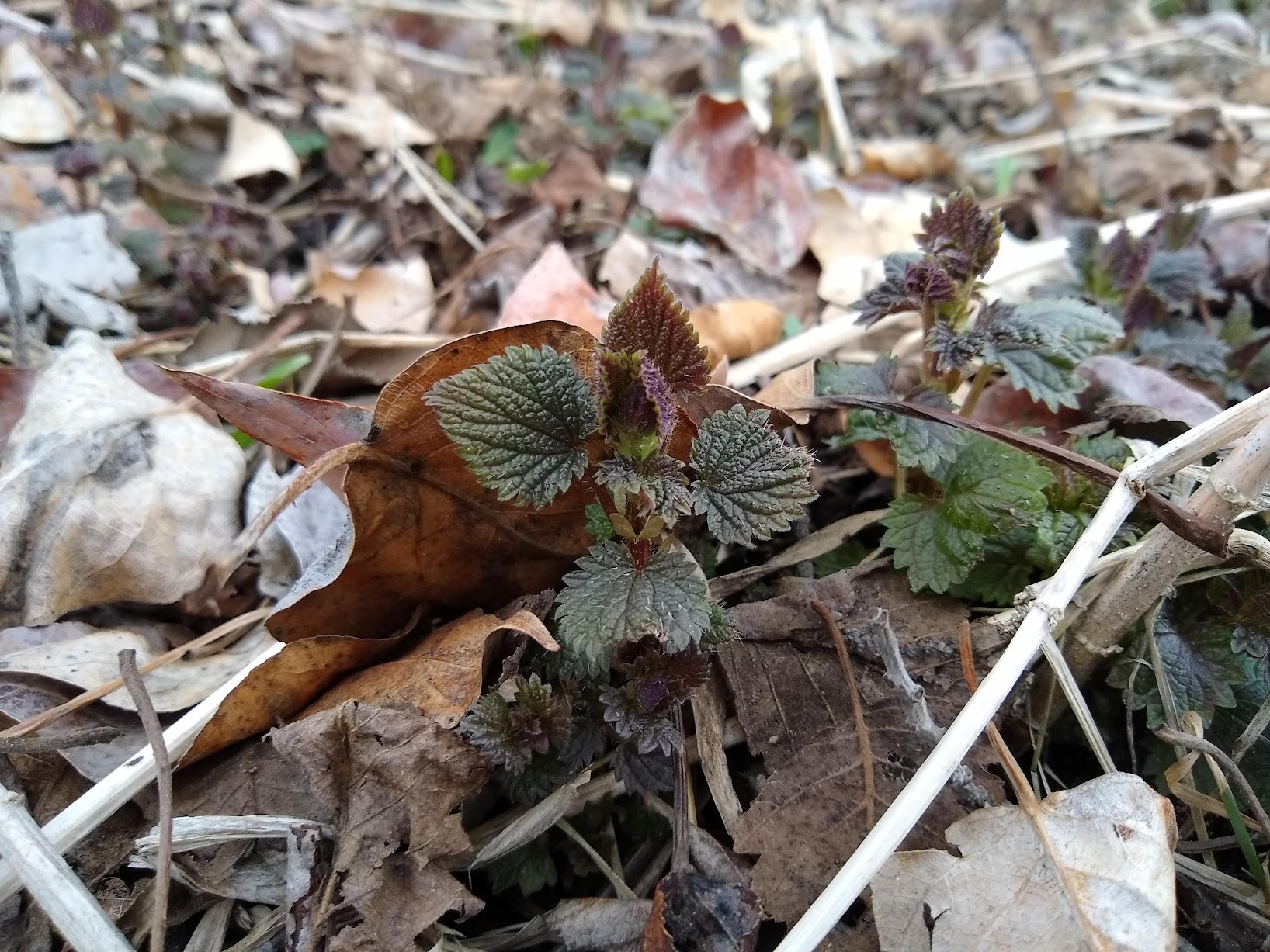
Some of the best medicine for your goats is already growing on your land. I’ve found that when we look around our local area, much of what we need to thrive can be found growing as “weeds.”
Spring is prime foraging season. Plants are waking up, putting energy into fresh growth, and many of them are at their most potent right now. If you’ve been wanting to incorporate more foraged herbs into your goat care, this is the time to start.

Here’s what to look for.
Early Spring Harvests
These are the plants to focus on first. Some have narrow harvest windows, so don’t wait too long.
Burdock Root
If you have second-year burdock plants on your property, early spring is the time to dig the roots. Before the plant sends up its flower stalk, the energy and medicine are still concentrated in the root. Once it bolts, you’ve missed your window.
What it’s good for: Liver and lymphatic support. Gentle detoxification. Good for animals who need long-term cleansing support.
How to identify it: Second-year plants will have the dried remnants of last year’s burrs nearby. The leaves are large, wavy-edged, and fuzzy underneath. Dig carefully, the roots go deep. I remember pulling some up as a teen when I got tired of brushing them out of my horses’ manes, and I was bringing up roots as tall as I was!
Nettle
Young nettle shoots are one of the most nutrient-dense plants you can harvest. Iron, calcium, vitamins, protein. It’s incredible support for does in late pregnancy and lactation, or for any animal who’s looking run down.
What it’s good for: Building and nourishing. Mineral supplementation. Supporting recovery.
How to harvest: Wear gloves. The sting is real. Harvest the top few inches of young growth before it flowers. Dry it, and the sting disappears completely. You can harvest a few times in early spring by taking the top few leaves and letting them regrow.
Dandelion
You know this one. It’s everywhere, it’s free, and it’s genuinely useful medicine.
What it’s good for: Leaves are a gentle liver support and mild diuretic. Roots go deeper on the liver support and are best harvested in fall, but early spring roots work too.
How to use it: Toss fresh leaves into feed—and your salads!—freely when they’re abundant. Dry extras for later.
Mid to Late Spring Harvests
These plants need a little more time to get established but will be ready soon.
Yarrow
One of the most versatile plants to have in your herbal toolkit. It’s often one of the first things to green up in spring.
What it’s good for: Stops bleeding. Supports healthy fever response. Digestive aid. Wound care.
How to harvest: Harvest the feathery leaves and, later in season, the flower heads. Dry for year-round use.
Mullein
Look for the fuzzy rosettes of first-year mullein getting established in disturbed areas, roadsides, and field edges.
What it’s good for: Respiratory support. Soothing to irritated airways.
How to harvest: Harvest leaves throughout spring and summer. The second-year flower stalks (if you have any from last year) also have medicine in them but those are for later in the year, toward the end of summer.
Plantain
Plantain, the low-growing “weed” with ribbed leaves that grows in every pathway and disturbed area. You’ve walked past it a thousand times.
What it’s good for: Drawing and soothing. Excellent fresh as a poultice for stings, bites, splinters, and minor wounds. Also useful dried and infused in oils for salves.
How to harvest: Pick leaves as needed. It’s abundant and forgiving.
Cleavers
Those sticky, climbing plants that grab onto your clothes and your goats’ coats? That’s medicine.
What it’s good for: Lymphatic support. Helps the body’s natural cleansing processes.
How to harvest: Harvest young, before it gets stringy and tough. Use fresh or dry quickly. This one is best used by blending fresh leaves with a little water to extract the chlorophyll from the leaves. Strain and freeze in ice cube trays for quick additions to anemia blends or your own smoothies.
Mints
Peppermint, spearmint, wild mint; whatever grows in your area. Usually ready a bit later in spring.
What it’s good for: Digestive support. Cooling. Pleasant flavor that most goats enjoy.
How to harvest: Cut stems freely. Mints are vigorous and can handle heavy harvesting. Dry in bundles. Mint can impact milk production if fed in large amounts, so share with your goats but save some for tasty teas for humans, too.
Foraging Basics
A few things to keep in mind as you get started:
Know what you’re harvesting. Get a good field guide for your region. When in doubt, leave it alone until you’re certain.
Avoid contaminated areas. Don’t harvest from roadsides with heavy traffic, areas that have been sprayed, or places where chemicals might have been used.
Harvest respectfully. Don’t take everything from one area. Leave plenty for the plant to regenerate and for wildlife.
Dry properly. Most herbs should be dried out of direct sunlight in a well-ventilated area. Store in glass jars away from light and heat.
Start Where You Are
You don’t need to harvest everything on this list. Start with what’s actually growing on your land. Learn one or two plants well this season. Add more next year.
The goal isn’t to replace everything in your medicine cabinet overnight. It’s to start noticing what’s around you, building a relationship with your land, and recognizing that support for your animals is often growing right under your feet.
Get ready to go exploring and see what’s waking up. That’s the first step. Then suddenly you’re surrounded by jars and bundles of herbs and people mutter something about “crazy herb lady” when you walk by with bits of greenery sticking out of your hair, but you don’t care because you’re happy with all your plant friends. 😁
